


How can you hire and grow a clinic team without becoming its bottleneck?
Grow your clinic team by matching each role to a clear operational need and giving each person defined responsibilities. A full diary can hide delayed patient follow-up, rising admin demands and decisions that still wait for your approval.
I’ve grown two clinic brands while taking three to four months off each year since 2022. Those experiences shape how I think about sustainable team growth: the right structure gives people room to contribute while keeping patient care central.
This article explains how to assess staffing needs, recruit and retain allied health employees, strengthen workplace culture and build a team that takes ownership. You’ll find practical ways to connect hiring decisions with your clinic’s day-to-day work.
Key Takeaways
- Choose your next hire by identifying the pressure point affecting patient care, clinical capacity or administration, then define the role’s ownership clearly.
- Document key clinic workflows before recruiting so a new team member can be trained with practical expectations and consistent support.
- Strengthen retention through regular feedback, staff recognition and a workplace culture that reflects the patient experience you want to deliver.
- Build team cohesion by delegating repeatable tasks, reviewing progress regularly and giving people the tools to take responsibility.
1. How many staff does my medical office need to hire?
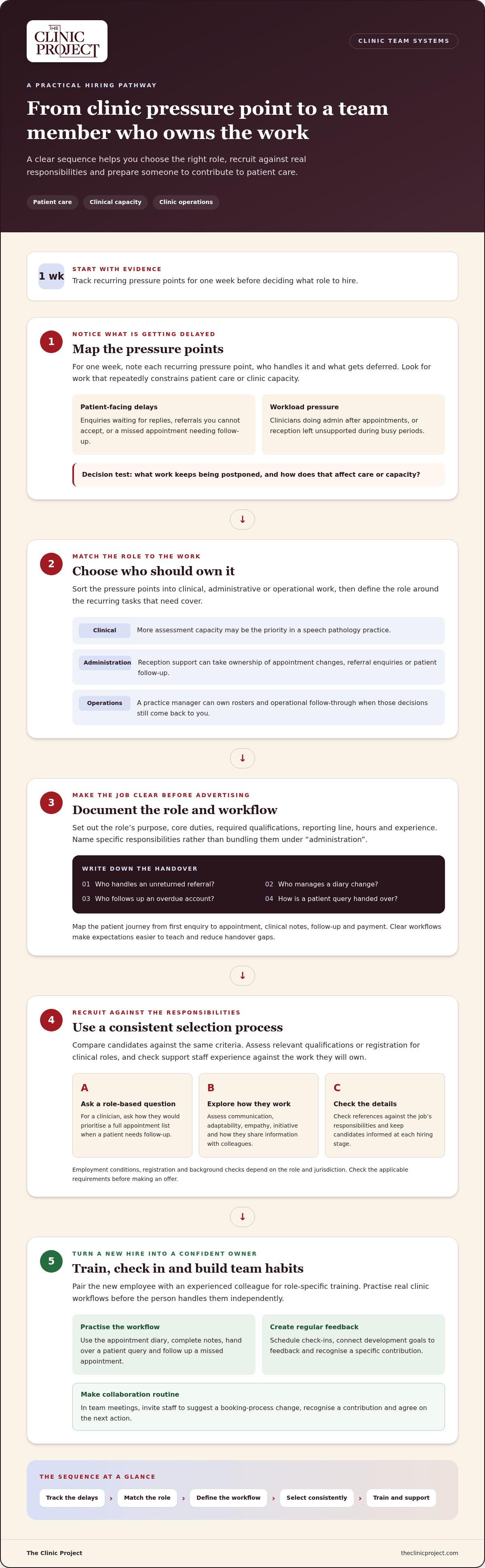
There’s no fixed headcount for an allied health clinic. Track where work is delayed: patient enquiries waiting for replies, referrals you can’t accept, clinicians doing admin after appointments, or reception left unsupported during busy periods. For one week, note each recurring pressure point, who handles it and what gets deferred. Hire for work that repeatedly constrains patient care or clinic capacity.
Wages, credentials and employment requirements depend on the role and jurisdiction. In Australia, check the relevant employment conditions with the Fair Work Ombudsman’s employment guidance, and verify registration requirements with AHPRA’s practitioner information where applicable. In New Zealand, Canada, Hong Kong and Singapore, check the local employment and professional registration requirements before advertising, as rules differ across jurisdictions and professions.
Match the role to your clinic’s service mix. A speech pathology practice might need more capacity for assessments, while a multidisciplinary clinic may need coordination across physiotherapy and psychology. List the tasks causing the greatest delays, then decide whether they call for a clinician, admin support or operations support. A practice manager can own rosters and operational follow-through when those decisions still come back to you.
Onboarding should prepare each new employee for your clinic’s actual workflows. Document how to use the appointment diary, complete notes, hand over a patient query and follow up a missed appointment. Pair the employee with an experienced colleague for role-specific training, then schedule check-ins to address questions. For example, practise the referral-routing process before a new receptionist handles it independently.
Understaffing can force patient communication and clinical work to compete for the same hours. Hiring before responsibilities and training are clear can create handover gaps and more decisions for you. Build collaboration into regular team meetings: invite staff to suggest a change to the booking process, recognise a specific contribution and agree on the next action. This makes feedback and recognition part of the routine.
2. Recruiting, hiring, and retaining medical staff
Recruitment works best when the role, selection process and candidate communication are clear. For a new physiotherapy clinic, map clinical appointments, referral handling and reception coverage before advertising. A growing speech pathology practice might prioritise another clinician, while a multidisciplinary clinic may need coordination across services.
Registration and background checks depend on the role and work involved. Identify the relevant registration or qualifications for each clinical position, then include appropriate reference and background checks in your hiring process. For support roles, assess experience against specific responsibilities, such as managing a patient waitlist.
Employment laws and healthcare requirements shape the conditions and responsibilities for each position. Before making an offer, align the employment terms with applicable Australian requirements and clearly define the role’s clinical or administrative boundaries. This helps candidates understand what the job involves from the outset.
An effective job description sets out the role’s purpose, core duties, required qualifications and reporting line. For example, specify whether a receptionist manages appointment changes, referral enquiries or patient follow-up instead of grouping everything under “administration”. State the hours and experience required so applicants can assess the role accurately.
Use structured interviews to compare candidates against the same criteria. Ask a clinician how they would prioritise a full appointment list when a patient needs follow-up, then explore their communication and adaptability. Assess empathy, initiative and how they share information with colleagues. Check references against the responsibilities in the job description.
Keep candidates informed at each hiring stage, with clear interview timeframes and updates after conversations. Once someone joins, connect their development goals to regular feedback and meaningful recognition. A well-defined incentive model can support motivation, while team input on patient handovers helps new employees understand how the clinic works together.
If hiring decisions keep returning to you, a structured conversation can help clarify the next role and its responsibilities. Explore a strategic hiring conversation as you plan your next clinic hire.
Requirements depend on the role and work involved. Identify the relevant registration or qualifications for each clinical position and include appropriate background and reference checks. Assess support staff experience against their responsibilities, and check references against the role’s duties.
3. Practice reputation and workplace culture
A medical practice’s reputation shapes patient trust and staff recruitment. A poor community or online reputation can deter talented applicants. Review your clinic website, job advertisement and public responses before opening a role. If a patient reports a confusing referral handover, assign someone to resolve it and explain the change to the team.
Culture shows in small, repeatable moments: how reception welcomes a late patient, how clinicians share rooms and how the team handles a payment query. Set a clear standard for each interaction, then ask employees where the process breaks down. A successful team can describe the expected behaviour on a busy Monday morning, not just repeat values from a staff handbook.
Roles should match the work your clinic needs covered. A physiotherapy practice might have clinicians, reception support and a practice manager responsible for rosters and operational follow-through. A multidisciplinary clinic may also need someone to coordinate referrals between speech pathology and psychology. Write down who handles an unreturned referral, a diary change and an overdue account so patients aren’t passed between roles.
Your electronic medical record (EMR) and practice management system should support clearly defined handovers. Map the patient journey from first enquiry to appointment, clinical notes, follow-up and payment. Identify who completes each step and where the information belongs. For example, set a clear process for recording an appointment-change request, then show reception and clinicians how to follow it consistently.
Systems shape staff experience as well as patient experience. If an employee has to ask you where to record every referral update, the workflow needs clearer ownership or training. Review a real handover in a team meeting, record the agreed process and update the relevant checklist. This turns a culture expectation into a practical clinic routine.
4. Building a cohesive healthcare team
A cohesive healthcare team gives each person clear ownership of the patient journey. In a multidisciplinary clinic, agree how a physiotherapist hands a patient over to a speech pathologist, who contacts the patient and where the next action is recorded.
Start with a recurring decision that depends on you, such as approving every roster change. Document the decision boundary, assign an owner and review how it works at the next team meeting. Delegation gives the employee authority to act within agreed limits, while you retain oversight of the outcome.
Use a short team meeting to connect each role with clinic priorities. For example, review a patient handover, identify where coordination stalled and agree on a process change. Reception can describe booking patterns, while clinicians clarify where follow-up instructions need to be clearer.
Use a practical comparison to see where team ownership is developing:
| Owner-dependent workflow | Team-owned workflow |
|---|---|
| You approve each referral handover. | A named role follows the agreed handover process. |
| Staff wait for you to decide on routine changes. | Employees use clear decision boundaries and escalate exceptions. |
Apply it by reviewing each practitioner’s billings against that benchmark, then discuss what the pattern says about capacity, appointment mix and support needs. Use the result to guide a conversation about development or workflow, rather than treating one figure as a complete measure of contribution.
Support development with role-specific goals. A practice manager could build confidence in roster planning, while a clinician strengthens peer case discussions. Agree on the support each person needs, then review progress during scheduled check-ins.
Make ownership visible in a shared task list, with a named person beside each action. If you’re ready to strengthen leadership and team systems, Book an Impact Call with Winnie.
The Clinic Project: Set to Scale
The Clinic Project’s Set to Scale supports allied health clinic owners who need clearer team, leadership and operational systems. It’s a natural next step when hiring decisions, staff responsibilities and everyday approvals still depend on you.
Use the work in this article to identify your most pressing team bottleneck, then build the systems around it: role ownership, patient handovers, recruitment and staff development. Set to Scale members average a 32% profit margin, compared with an industry average of around 15%.
If your clinic is in the Messy Middle and you’re ready to make team growth more structured, visit theclinicproject.com to explore Set to Scale.
Make your next team decision deliberate
Your next step is to choose a leadership decision that will no longer sit with you by default. Set a clear owner, agree on what good judgement looks like, then give that person room to act. This decision-making shift is central to how to hire and grow a clinic team without making the owner the permanent approval point.
Build a business around the life you want it to support. Your clinical hours, fixed commitments and energy all matter when deciding which leadership work belongs with you and what the team can own. A clinic that depends less on your constant input has more room for thoughtful growth and consistent patient care.
For structured support with clinic leadership and growth, The Clinic Project offers Set to Scale, Impact Mastermind and CEO Weekend. Choose the next step that fits the challenge in front of you, then put one clear decision into practice. Book an Impact Call with Winnie to discuss your clinic’s next stage. You can build a capable team one well-designed decision at a time.
Frequently Asked Questions
How do you recruit healthcare employees?
Recruit healthcare employees by defining the role’s purpose, responsibilities and essential experience before advertising. To decide how to hire and grow a clinic team, connect each role to a real clinic need, such as coordinating referrals or delivering a particular allied health service. Use consistent interview questions, keep applicants updated and assess how they communicate about patient care and teamwork.
How many staff does my medical office need to hire?
Hire enough staff to cover recurring work without creating roles that lack clear ownership. Review appointment demand, enquiry volumes, clinician availability and admin work currently done outside rostered hours. For example, if appointment changes regularly interrupt treatment sessions, map the task before deciding whether more reception coverage or another role would address the pressure more directly.
What roles should a growing clinic hire first?
The right first role depends on whether demand exceeds clinical capacity or operational work is restricting your existing team. A clinic turning away suitable referrals could prioritise another allied health practitioner. If clinical appointments run smoothly but rosters, follow-up and team coordination still depend on you, define the practice manager’s role and decision-making authority.
Where can clinics recruit qualified medical and administrative staff?
Advertise clinical and administrative vacancies through established job platforms such as Indeed or LinkedIn, alongside relevant professional networks and local referrals. A physiotherapy clinic can share a role through its professional community, while a speech pathology practice can reach graduates through university networks. Use your clinic website to explain its services, team approach and expectations.
How can clinics improve staff retention, engagement, and career development?
Make development part of each employee’s regular work plan. A clinician could set a goal around peer case discussions, while a receptionist builds confidence managing complex appointment enquiries. Agree on the support needed, then revisit progress in a scheduled conversation. Recognise specific contributions, such as a thoughtful patient handover, and explain how they support the clinic’s service standards.
How do you plan staffing levels and schedules as patient volume grows?
Plan schedules by reviewing appointment demand alongside clinician availability, room use and the mix of services patients need. For example, compare the physiotherapy diary with reception coverage before adding evening appointments. Track recurring gaps, planned leave and referral patterns, then adjust rosters and responsibilities together so increased demand doesn’t lead to unowned follow-up or rushed handovers.

Article by
Winnie Wu
Physiotherapist Winnie Wu builds allied health clinics that are highly profitable and run without their owner. She has founded four health brands. Her two Sydney clinics, Movement Laboratory and the award-winning Papaya Clinic, let her take three to four months off every year. Through The Clinic Project she works directly with women clinic owners on profit, systems and leadership, and her Set to Scale clients average a 32% profit margin, more than double the industry average. Every framework she teaches runs in her own clinics first.