

How to Scale a Physio Clinic Without Sacrificing Care

A physio clinic scales sustainably when capacity, patient experience, team responsibilities and financial decisions work together. If you’re considering how to scale a physio clinic, start by defining what growth should make possible for you and your patients. A larger operation needs to support the care you want to provide and the life you want to lead.
A strong reputation and a busy clinic can still leave you approving routine decisions and carrying unresolved questions home. You may want to treat less while maintaining clinical standards and supporting your team. That takes clear priorities and deliberate changes, not growth for its own sake.
This article will help you identify what to strengthen before expanding. You’ll consider your role as owner, clinic capacity, patient relationships and financial planning, then use those decisions to choose a practical next step. The goal is a clinic that serves patients well and relies less on you to keep every part moving.
Key Takeaways
- Map practitioner and room utilisation before adding capacity, so roster changes respond to genuine bottlenecks.
- Strengthen rebooking and follow-up before increasing marketing, giving more patients a clear next step in their care.
- Forecast cash flow against expected billings, payroll and operating costs to plan growth with fewer surprises.
- Reduce owner dependence by assigning decision-making and operational responsibility clearly across the team.
1. Burnout and the challenges of the growth stage
Growth-stage burnout often appears after a physio clinic fills its diaries. You’re treating patients, approving roster changes and answering staff questions between appointments. The 7pm message about tomorrow’s sick-leave cover keeps you responsible for every moving part, even when the team is growing.
The Messy Middle: the growth stage where clinics expand but systems break and owners become the bottleneck. A full caseload can hide weak delegation, unclear role boundaries and thin profit. Profit by Design sets a clear standard: a healthy clinic runs at 25%+ profit, including a decent director salary. The allied health average sits around 15%.
To hire and retain physiotherapists, define the role before recruiting, then provide a clear induction, regular feedback and reliable handover processes. For example, document who reviews a new patient’s care plan and who follows up when the patient doesn’t rebook. Clear expectations, supervision and development help clinicians feel supported and make responsibilities easier to manage.
I’ve grown two clinic brands while taking three to four months off each year since 2022. That requires decisions to sit with the right person, rather than returning to the owner by default. My CEO Workflow approach aligns work with the owner’s energy and fixed commitments, then assigns recurring tasks to clear roles.
For multi-location growth, clinic management software should give teams a consistent view of appointments, patient records and operational reporting across sites. Pair it with shared protocols for referrals, clinical handovers, cancellations and escalation, so patients receive a consistent experience at every location.
List the decisions that still need your approval, from clinician leave to fee-schedule exceptions. Assign each decision to a role, document approval limits and explain them at your next team meeting. Use practitioner performance alongside care quality and clinic profit to guide growth planning.
2. Clinic capacity and treatment-room expansion
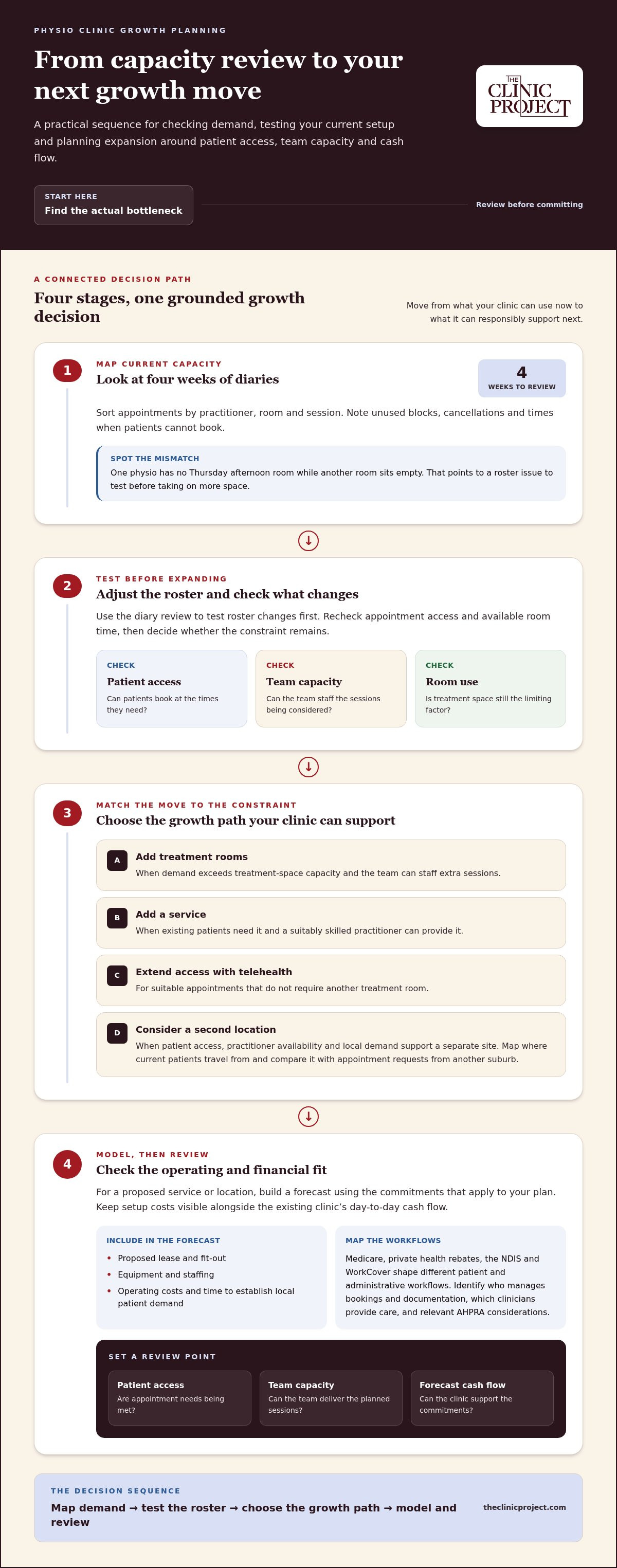
Before adding rooms, check whether existing appointments use the clinic’s available capacity. Review four weeks of diaries by practitioner, room and session, noting unused blocks, cancellations and times patients cannot book. If one physio has no Thursday afternoon room while another room sits empty, adjust the roster before considering a lease.
Choose the type of growth that addresses the actual constraint. Add rooms when demand exceeds treatment-space capacity and the team can staff extra sessions. Add a service when existing patients need it and a suitably skilled practitioner can provide it. Telehealth can extend access for suitable appointments without requiring another treatment room.
A second location may make sense when patient access, practitioner availability and local demand support a separate site. Map where current patients travel from, then compare that pattern with appointment requests from another suburb. Plan how the new site will maintain consistent intake, clinical handovers and patient follow-up.
In Australia, Medicare, private health rebates, the NDIS and WorkCover each shape different patient and administrative workflows. Before adding a service or location, map which funding streams apply, who handles related bookings and documentation, and which clinicians provide care. Include relevant AHPRA considerations in workforce and service planning.
There is no single cost for opening another physio clinic in Australia. Build a forecast from the proposed lease, fit-out, equipment, staffing, operating costs and time needed to establish local patient demand. Separate these commitments from your existing clinic’s cash flow so setup costs don’t obscure day-to-day obligations.
Use this sequence: map demand by suburb and appointment time, test roster changes, then model a proposed service or location. Set a review point using patient access, team capacity and forecast cash flow. If you need a structured discussion about the decision, clinic growth planning with Winnie can help you examine the operational bottleneck before committing.
3. Increasing customer numbers, average order value, and retention
Grow patient numbers by strengthening the referral paths that already bring suitable people to your clinic. Record whether new patients come through a GP, another health professional, an existing patient or a local search, then review which sources lead to appropriate care. A referral guide with your services, referral process and contact details gives local referrers a clear next step.
Before increasing promotion, review how your clinic explains care and follow-up. A patient attending a physiotherapy assessment should understand the proposed plan, expected review points and options for booking the next appointment. For Medicare, private health, NDIS or WorkCover patients, make the relevant booking and administration steps clear to both the patient and team.
Use three levers to improve sustainable clinic growth:
- Attract suitable enquiries: Keep your Australian clinic’s online service details and suburb information accurate. Track enquiry source and whether each enquiry becomes an attended appointment.
- Improve value per patient: Explain clinically appropriate services and care plans clearly. Review revenue per attended appointment alongside practitioner time, so the fee schedule and appointment mix support viable service delivery.
- Strengthen retention: Agree on a follow-up plan where clinically appropriate, and contact patients who miss a planned review. Ask discharged patients for feedback about their experience and use recurring themes to improve communication.
Before expanding, review enquiry-to-attendance conversion, cancellations, rebooking, patient retention, practitioner utilisation and profit margin. These measures help identify whether the next constraint is referral flow, appointment access, continuity of care or the economics of your current service mix.
For a focused test, ask reception to contact ten past patients this week who have no future appointment recorded, where follow-up is appropriate. Record their responses and bookings, then use the results to refine your re-engagement process. Keep the measure tied to patient needs, rather than assuming every return appointment is the right outcome.
4. Cash-flow forecasting
A cash-flow forecast shows when clinic revenue arrives and when commitments fall due. A profitable month can still create pressure if insurer, NDIS or private health payments arrive after payroll, rent or superannuation is due. Map expected receipts by payment source and timing, rather than treating booked appointments as cash already received.
Build a rolling 12-week forecast and update it weekly. Use your practice system’s booked appointments, expected cancellations and payment records, then compare forecasts with actual deposits. For example, separate private patient payments from WorkCover and NDIS receipts, so delayed claims don’t obscure cash available for ordinary expenses.
- Record opening cash: Start with the business bank balance, then list expected patient and payer receipts by week.
- Schedule outgoings: Add payroll, rent, superannuation, supplier payments, tax commitments and planned equipment purchases.
- Model changes: Test the cash effect of recruiting a physiotherapist, changing a roster or fitting out another treatment room.
- Review the variance: Each week, compare actual receipts and payments with the forecast, then revise the next weeks.
Separate committed revenue from uncertain demand. A full diary doesn’t guarantee every appointment will be attended, paid promptly or claimed without delay. Use confirmed bookings and known payment cycles for your base forecast, and keep expected new referrals separate until they become booked care.
Set a clear decision rule before approving new costs. For example, tie a proposed clinician’s start date to forecast cash after wages, onboarding and the expected appointment ramp-up. If the forecast tightens, adjust the timing or operating plan before committing, rather than relying on personal funds to cover a shortfall.
I use forecasting to make growth decisions visible before they become urgent. For a clinic with several practitioners or a planned location, Book an Impact Call with Winnie to work through the financial and operational bottlenecks.
The Clinic Project: Set to Scale
The Clinic Project’s Set to Scale program helps allied health clinic owners strengthen profit, operations and team leadership. It may suit your clinic if you have full books but growth still depends on your clinical hours or constant approval of decisions.
Build the systems behind sustainable growth, including clear roles, better financial visibility and an operating structure that supports consistent patient care. Start by identifying the bottleneck, setting priorities and developing the processes your team needs to take on more responsibility.
If you’re in the Messy Middle and want structured support to move forward, explore Set to Scale. Visit theclinicproject.com to learn more.
Build growth around the clinic you want to lead
A practical approach to how to scale a physio clinic starts with your definition of a well-run clinic. Decide which responsibilities you want to keep, which decisions your team can own and what patient experience must remain consistent as the business grows. That direction gives your operational changes a clear test.
Choose growth support that matches your clinic’s stage and the decisions in front of you. The Clinic Project offers Set to Scale, Impact Mastermind and CEO Weekend events for clinic owners working through business growth and leadership priorities. Select the next step that will help you address your specific bottleneck.
If you’re ready to work through your clinic’s growth priorities with Winnie, Book an Impact Call with Winnie. A clear plan can help you lead growth while keeping care and your own priorities in view.
Frequently Asked Questions
What are the key steps to scale a physical therapy clinic?
Set care and service standards first, then build growth around a defined operational plan. Assign a team lead to oversee implementation, document how new patients move from enquiry to discharge, and test changes with one clinic team or service before rolling them out across the practice. If you’re asking how to scale a physio clinic, use patient experience and sustainable workload as decision criteria.
How can a physical therapy clinic increase patient volume and referrals?
Make it easy for existing patients and local referrers to understand who your clinic helps and how to refer. For example, prepare a concise guide describing suitable presentations, appointment options and how to send clinical information. Ask discharged patients for feedback, then use recurring questions to improve patient education and service information. Track which referral relationships lead to appropriate bookings, not just more enquiries.
What are the risks and common reasons physical therapy clinics fail when scaling?
Clinics can create pressure by hiring ahead of dependable demand, taking on fixed commitments too early or relying on one clinician to manage key patient relationships. A warning sign is a new practitioner’s diary remaining thin while existing clinicians are overloaded with complex handovers. Set a review point for each expansion decision, and pause further commitments if service standards, team stability or financial control deteriorate.
How can a physical therapy clinic finance growth and forecast profitability?
Choose funding by matching repayment obligations to the timing and reliability of expected clinic income. Before using retained cash or external finance, model the new service or location separately, including fit-out, recruitment, operating costs and the time needed to establish patient demand. Show the expected contribution after costs, then ask your accountant to review tax treatment, repayment capacity and the effect on your existing clinic.

Article by
Winnie Wu
Physiotherapist Winnie Wu builds allied health clinics that are highly profitable and run without their owner. She has founded four health brands. Her two Sydney clinics, Movement Laboratory and the award-winning Papaya Clinic, let her take three to four months off every year. Through The Clinic Project she works directly with women clinic owners on profit, systems and leadership, and her Set to Scale clients average a 32% profit margin, more than double the industry average. Every framework she teaches runs in her own clinics first.