
Impact Mastermind: Why Australian Clinic Owners Join
A clinic owner mastermind program can help established allied health clinic owners work through strategic decisions with expert guidance and peer perspectives. If your clinic is busy but still depends on you for every decision, assess the fit by looking at your stage, leadership challenges and the decisions you need to make.
When roster changes, fee decisions or a 7pm staff issue still land with you, useful strategic support should help you reach a clear decision and build leadership around it. You won’t be here without strategy.
I founded and operate two Sydney clinics, and I work directly with owners through Impact Mastermind. The program combines tailored strategic guidance with peer collaboration for established clinic owners, particularly those with 10 or more practitioners or turnover above $1 million. The questions below can help you assess whether its focus on leadership and strategic expansion fits your clinic.
Key Takeaways
- Assess a clinic owner mastermind program against your clinic’s stage, leadership challenges and next strategic decision.
- Name the bottleneck before choosing a priority for your team to act on.
- Compare peer collaboration and founder-led guidance with the level of individual diagnosis your clinic needs.
- Check whether Impact Mastermind’s focus on leadership and strategic expansion matches your priorities.
When does a clinic owner mastermind program make sense?
Full books can sit alongside very little freedom. In the Messy Middle, routine decisions about the roster, patient handovers or fees can still wait for your approval, even when demand is steady. A clinic owner mastermind program makes sense when you need strategic work and peer learning to address persistent leadership or operational decisions, rather than another place to collect ideas. A mastermind group brings people together to exchange perspectives and support progress towards shared or individual goals.
What signals that your clinic is ready?
Readiness shows up in a recurring business issue, not simply a full appointment book. For example, your practice manager might organise the weekly roster but bring every clinician leave request to you for approval. That points to a need for clearer decision rights and stronger leadership capacity. The practical question is whether you’re ready to address the pattern and put changes into practice across the clinic.
Impact Mastermind is designed for established allied health clinic owners, including those with 10 or more practitioners or turnover above $1 million. Turnover alone does not establish readiness. Name the strategic challenge you want to address, such as developing team performance, improving profitability or reducing day-to-day reliance on you.
How does clinic stage change the decision?
The Messy Middle: the Clinic Freedom Framework stage where the owner carries a heavy daily approval load as the team and clinic operations become more complex. Priorities at this stage can include clarifying roles, improving handovers between practitioners and maintaining consistent patient care when you’re treating or away.
Established, seven-figure clinics can face different decisions, including strategic expansion and leadership development. I work directly with owners through Impact Mastermind, bringing tailored strategic guidance together with peer collaboration. Your clinic’s stage, strategic need and readiness to implement should guide the decision.
What should a clinic owner mastermind program help you work on?
Start with a strategic decision that affects how your allied health clinic operates, rather than a general wish to grow. A clinic owner mastermind program is useful when you can connect peer discussion to a defined priority and a practical next action.
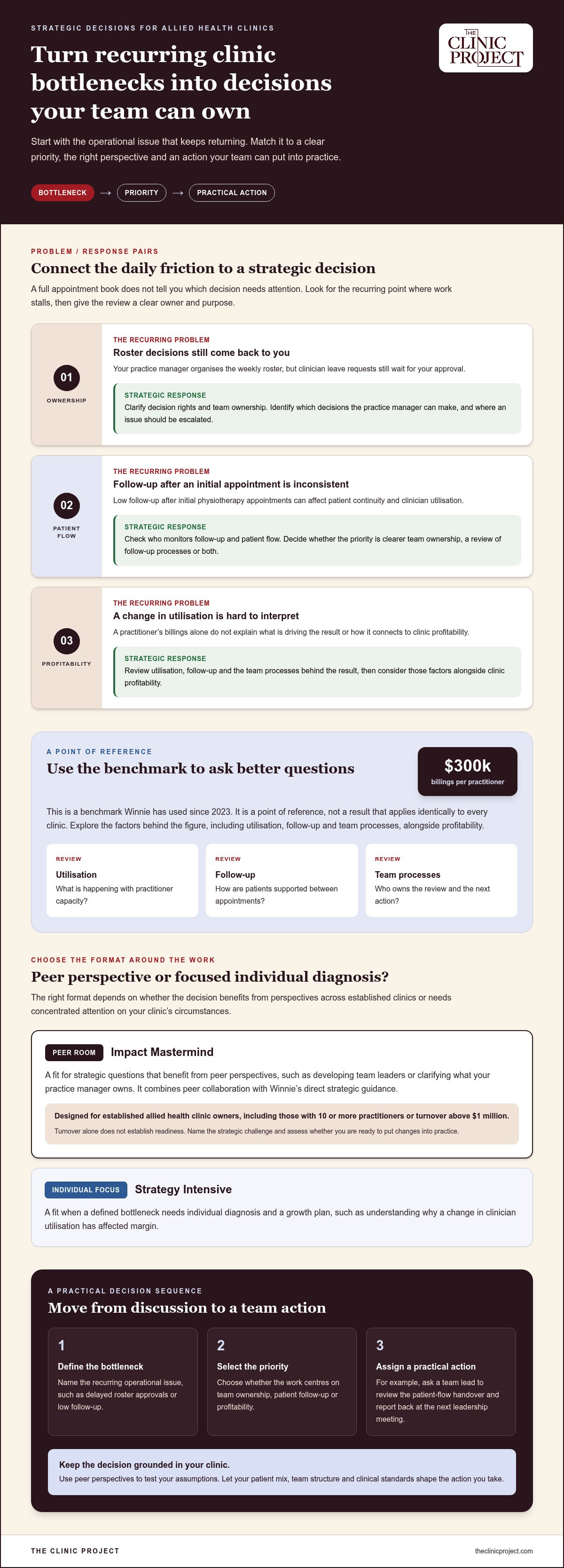
1. Define the bottleneck. Identify whether low follow-up after initial physiotherapy appointments is affecting patient continuity and clinician utilisation.
2. Select the strategic priority. Decide whether the issue calls for clearer team ownership, a review of patient follow-up processes or closer attention to profitability.
3. Assess peer relevance. Ask whether perspectives from established clinic owners could help you evaluate your options, while keeping your patient mix and clinical standards central to the decision.
| Priority | What to examine | Strategic question |
|---|---|---|
| Team ownership | Who monitors follow-up and patient flow? | Which role should own the review? |
| Profitability | Billings per practitioner and clinic margin | Which leadership or operating decision affects the figures? |
| Patient experience | How patients are supported between appointments | Can the team improve continuity while maintaining clinical quality? |
Worked example: I’ve used $300k in billings per practitioner as a benchmark since 2023. When reviewing one practitioner against it, examine utilisation, follow-up and the team processes behind the result, then consider those factors alongside clinic profitability. The benchmark gives you a point of reference, not a decision that applies identically to every clinic.
Peer owners can bring useful perspectives, while my direct strategic guidance keeps the discussion connected to your clinic’s priorities. Your team, patients and operating context should shape the actions you take.
Is a mastermind the right format if you need individual attention?
A peer format can include direct expert guidance and a clear strategic focus. Choose the format based on the work in front of you: some decisions benefit from perspectives across established clinics, while a specific bottleneck can need concentrated attention on your clinic’s circumstances.
Impact Mastermind
Suited to strategic questions that benefit from peer perspectives, such as developing team leaders who can manage patient-flow decisions or clarifying what your practice manager owns. I work directly with clients, bringing founder-led guidance alongside peer collaboration.
Focused one-to-one support
A fit for a defined bottleneck that needs individual diagnosis and a growth plan. Strategy Intensive is relevant when you want to focus on a specific clinic challenge outside a peer setting.
When does the peer room add value?
Peer input can help when you’re weighing leadership approaches across different allied health teams. For example, other owners can prompt questions about how a team lead handles a late cancellation, protects continuity of patient care and escalates an issue to the practice manager. Your patient mix and team structure guide the final decision.
A useful discussion tests your assumptions and ends with a practical action. You might assign a team lead to review the patient-flow handover and report back at the next leadership meeting. A clinic owner mastermind program is most useful when peer perspectives connect to a decision you’re ready to implement.
When is a focused strategic session a better fit?
If the core issue is specific to your clinic, such as understanding why a change in clinician utilisation has affected margin, individual diagnosis gives that question focused attention. The article Allied Health Practice Growth Program: How to Find the Right Fit also explores how to match support to your business needs.
For details about discussing fit with Winnie, visit the Impact Call page.
How can you assess Impact Mastermind against your clinic’s priorities?
Use this four-part check to match the program’s focus to the work your clinic needs now:
- Current bottleneck: Name the decision that still lands with you, such as a 7pm roster approval or a team leader waiting for sign-off on a patient handover.
- Strategic priority: Identify what you want to address, such as developing leadership, improving profitability or preparing for strategic expansion.
- Leadership readiness: Look at whether your practice manager or team leads can own a defined area, and where clearer decision rights or support would help.
- Willingness to act: Decide whether you’re ready to test a change, assign responsibility and review how it’s working in the clinic.
Impact Mastermind is designed for established allied health clinic owners, including clinics with 10 or more practitioners or turnover above $1 million. Use those markers alongside your strategic need. A clinic’s size alone does not show which decisions require attention.
What should you bring to a fit conversation?
Bring one live decision, such as a roster approval you handled at 7pm, alongside relevant clinic metrics and a simple picture of your team structure. Note who manages clinician schedules, monitors patient flow and escalates staffing issues. This makes it easier to see where your involvement is necessary and where stronger leadership could support more consistent operations.
What does a relevant next step look like?
Impact Mastermind combines my direct strategic guidance with peer collaboration for owners working on leadership development and strategic expansion. The key question is whether that combination fits the priority you’ve named and the action you’re prepared to take.
To discuss that fit with Winnie, visit the Impact Call page.
Choose the next strategic move for your clinic
Before choosing a clinic owner mastermind program, write down what you want your leadership team to take ownership of over the next quarter and how you’ll recognise progress. For example, define which routine operational decisions your practice manager can make independently and which still need your input. This gives you a practical starting point for assessing the right support.
For established allied health owners, Impact Mastermind brings strategic guidance and peer collaboration to leadership development and strategic expansion. I work directly with clients, drawing on my experience founding and operating two Sydney clinics. The Clinic Project works with allied health owners in Australia, New Zealand, Canada, Hong Kong and Singapore, with each clinic’s context informing its strategic decisions.
When you’re ready to discuss your clinic’s priorities, visit the Impact Call page. Bring the decision you want to work through and the team changes you’re ready to make.
Frequently Asked Questions
Is a clinic owner mastermind program right for a seven-figure allied health clinic?
Yes, when your clinic has strategic decisions that benefit from experienced guidance and peer perspectives. You might be reviewing how clinical team leaders share responsibility for patient flow as the practice grows. The program is most relevant when you’re ready to work on a defined leadership or expansion priority and put agreed actions into practice.
What happens in an allied health clinic mastermind?
Clinic owners work through business priorities with strategic guidance and input from peers who understand clinic operations. A discussion could examine how to structure a leadership meeting so clinician leads raise roster pressures, patient access and handover issues before they become owner-only decisions. The aim is clearer thinking about real decisions, with each owner responsible for what suits their clinic and patients.
How is a mastermind different from one-to-one business support?
A mastermind combines direct guidance with perspectives from other owners, while one-to-one support centres on your clinic’s circumstances. Peer input can prompt different ways to approach a practice-manager responsibility; individual work can examine a specific bottleneck in detail. I work directly with Impact Mastermind clients, so the group format includes founder-led strategic guidance as well as peer collaboration.
Who is Impact Mastermind designed for?
Impact Mastermind is designed for established allied health clinic owners focused on leadership development and strategic expansion. It suits owners ready to work on how their team operates and how the clinic’s next stage is led. The Clinic Project works with allied health owners in Australia, New Zealand, Canada, Hong Kong and Singapore.
How do I decide whether to book an Impact Call?
Book an Impact Call when you can name a current strategic decision and want to discuss whether Impact Mastermind fits that need. Beforehand, note the issue, who currently owns it and any relevant figures, such as margin trends or clinician utilisation. A concise picture of your team structure will help keep the conversation grounded in your clinic’s priorities.

Article by
Winnie Wu
Physiotherapist Winnie Wu builds allied health clinics that are highly profitable and run without their owner. She has founded four health brands. Her two Sydney clinics, Movement Laboratory and the award-winning Papaya Clinic, let her take three to four months off every year. Through The Clinic Project she works directly with women clinic owners on profit, systems and leadership, and her Set to Scale clients average a 32% profit margin, more than double the industry average. Every framework she teaches runs in her own clinics first.